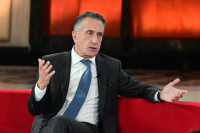
Europe is facing three “existential” challenges that require deeper economic and defense integration, according to Klaus Regling, the former head of the European Stability Mechanism, who also praised Greece for its dramatic fiscal improvement since the eurozone debt crisis.
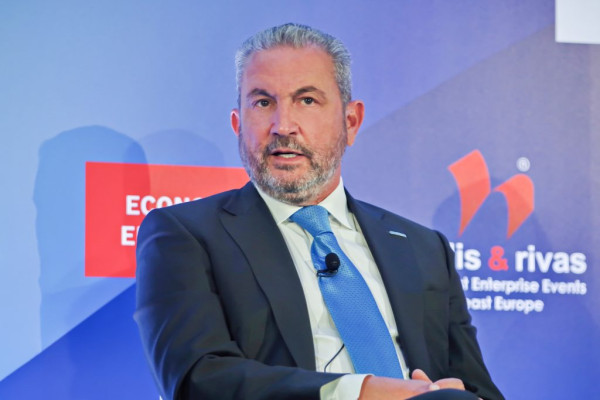
Speaking on Friday at the third Economic Conference organized by Greek financial newspaper Imerisia, Regling identified the erosion of the international multilateral order, pressure from major global powers and Europe’s weak growth outlook as the European Union’s most pressing threats.
The challenges are particularly serious for a bloc that has prospered under a rules-based international system and now finds itself navigating increasingly difficult relations with Russia, China and the U.S., Regling said. At the same time, sluggish economic growth is putting pressure on public finances and the sustainability of Europe’s social-security systems.
ΔΙΑΒΑΣΤΕ ΕΠΙΣΗΣ

His prescription is greater European integration. Regling said completing the EU’s single market and creating a European Defense Union should be top priorities as the bloc seeks to strengthen its economic competitiveness and strategic autonomy.
The former ESM chief argued that Europe has a history of advancing through crises. The eurozone debt turmoil produced new financial institutions and safeguards, the pandemic led to the creation of the NextGenerationEU recovery fund, and Russia’s invasion of Ukraine accelerated European defense cooperation.
Further changes are needed, he said. The EU should expand qualified-majority voting to reduce its reliance on unanimity, particularly as it prepares for possible enlargement. European competition policy should also be better aligned with industrial-policy objectives, while the bloc should deepen economic ties with partners including India, Japan, South Korea, Canada and Australia.
Regling also called for a stronger international role for the euro, which he said could reduce Europe’s dependence on U.S.-based payment infrastructure and strengthen the eurozone’s resilience to external financial shocks.
His assessment of Greece was notably positive. Regling, who played a central role in managing the eurozone crisis and Greece’s rescue programs, said he was “impressed” by what the country had achieved over the past 15 years.
Greece’s macroeconomic fundamentals are now in order, he said, highlighting the roughly twofold increase in exports as a share of gross domestic product. He described the country’s fiscal progress over the past decade as “impressive,” saying Greece now broadly recognizes that sustainable public finances are essential.